A First Visit to a Community Archive
A first visit to a community archive is easier with one clear question: learn how to use catalogs, read materials closely, and notice what is missing.
The most common mistake on a first visit to a community archive is trying to see everything at once. You can leave with a stack of notes but no clear sense of what you learned—or which items deserve another look. A single question gives your visit a useful shape without asking the archive to tell a complete story.
What should I decide before visiting a community archive?
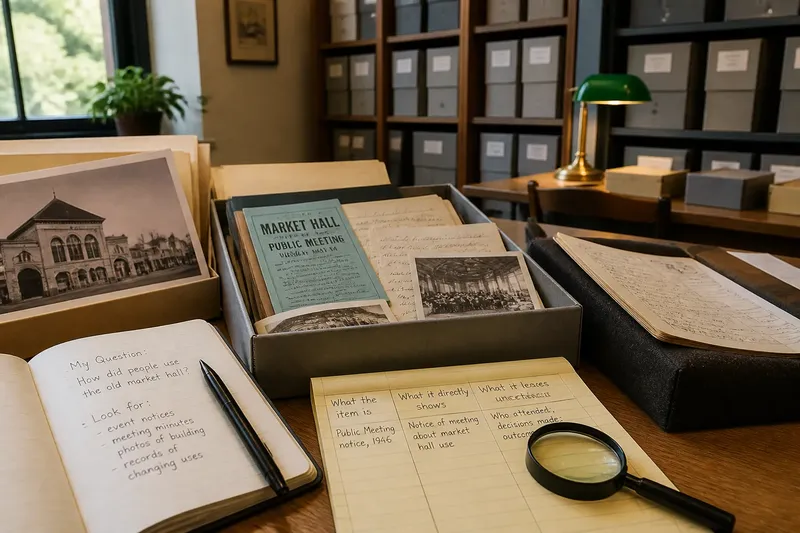
Choose one question small enough to investigate in the time you have. “How did people use the old market hall?” is more workable than “What was life like here?” You might look for event notices, meeting minutes, photographs of the building, or records of its changing uses.
A good question is open, but it has edges. It leaves room for unexpected material while helping you decide what to request. Try writing it on a note you can keep beside your catalog search. If the wording grows too broad, narrow the place, group, activity, or period that interests you.
Say you are curious about how a neighborhood garden became a shared place. You might begin with: “What kinds of gatherings were recorded at the garden?” If the catalog turns up flyers and minutes, your question can guide what you inspect; if it turns up little, that absence is a reason to ask staff about other descriptions, not a reason to assume no gatherings occurred.
How do I find relevant material in the catalog?
Start with the archive’s online catalog or printed finding aids, then search for several terms related to your question. A garden might appear under “community garden,” “allotment,” “park,” a street name, or the name of an organizing group. Catalog language reflects how material was described and arranged, so one search term rarely covers every possibility.
Open collection descriptions as well as individual item records. A description may explain who donated the material, what kinds of records it includes, and where its coverage begins or ends. A collection that sounds relevant can still contain only a small slice of the activity you are exploring.
Keep a short search trail: the terms you tried, titles that looked promising, and any reference numbers the catalog provides. If a search produces nothing, note that too. It helps you ask a precise question at the desk rather than repeating the same search.
What should I ask archive staff?
Ask staff how to request items and whether the catalog description leaves out details useful to your question. They may be able to suggest another collection, a different subject term, or a relevant index. Tell them what you searched and what you hoped to learn; that context makes a practical conversation easier.
You can also ask about the reading room’s rules before handling anything. Access, copying, photography, and handling requirements vary by institution and material. Follow the archive’s posted guidance and staff directions, and ask before touching or reproducing an item if you are unsure.
Bring a notebook or use the archive’s permitted note-taking method. Record the collection name, item title, and reference details as you go. A striking photograph or a handwritten note can be hard to relocate later if you have captured only its subject and not its archival context.
How should I read a catalog description?
Read a description as a guide to the material, not as a verdict on what matters. Notice who created or collected the records, what kinds of items are included, and which dates or subjects the description actually covers. The person or institution that assembled a collection may have had a particular purpose, and later cataloging may organize it in another way.
Pay attention to limits stated in the description: gaps, missing pages, unclear authorship, or a narrow date range. These details affect what the material can support. A folder titled “Garden events” might contain a few printed notices rather than a complete record of every gathering.
Descriptions also use categories. A catalog may name an organization but not everyone who took part, or describe an item by its format rather than by the people represented. Treat those labels as useful clues, then check whether the material itself supports the assumptions you brought with you.
How can I examine materials without overreading them?
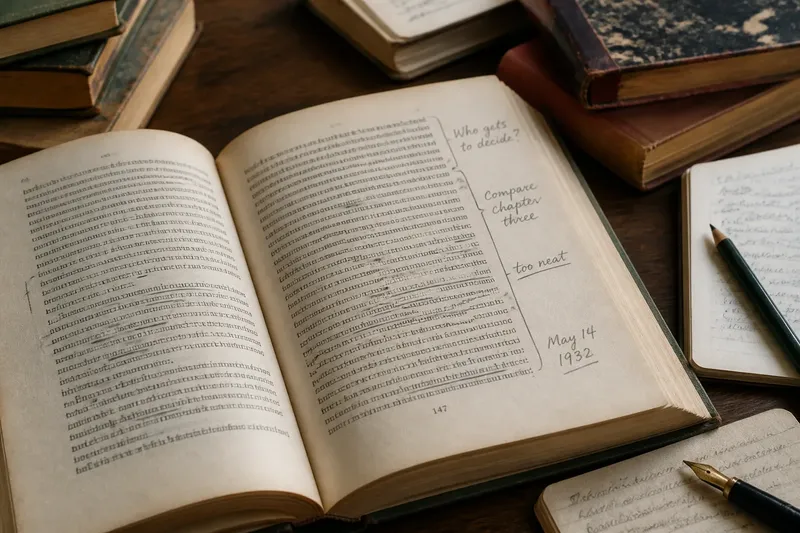
Begin with what you can observe directly: the wording on a flyer, the names listed in minutes, the date written on a photograph, or the marks of revision on a document. Separate those observations from your interpretation. “The notice lists a planting day” is different from “everyone in the neighborhood was involved.”
Ask what a particular item was made to do. A meeting agenda organizes discussion; a newsletter selects what its editor thought readers should know; a photograph frames a scene from one position. This does not make an item useless. It clarifies what kind of evidence it offers.
Use a simple note format with three lines: what the item is, what it directly shows, and what it leaves uncertain. That small distinction can keep an appealing detail from carrying more weight than it can bear. It is like reading a map: the marks help you orient yourself, but they are not the whole place.
What does an absence in the archive tell me?
An absent record tells you first that you did not find that record in the material you consulted. It does not, by itself, explain why. Records may never have been made, may have been discarded, may be held elsewhere, or may be cataloged under unfamiliar terms.
Make the absence specific. Note which collection and search terms you used, and what kind of material you expected. Then ask whether another source might speak to the same question: a local organization’s own records, a neighborhood newspaper, or an oral-history collection, if one exists and is accessible.
Do not turn a missing name or voice into a claim that a person or group was uninvolved. The archive can show what has been preserved and made available in the collections you encountered. It cannot automatically settle what happened beyond them.
How should I close a first archive visit?
Before leaving, write down what surprised you, what your materials can support, and what remains unresolved. Choose one follow-up action, such as trying a new catalog term or asking whether a related collection exists. A focused note is more useful than a long page of impressions you cannot connect to specific items.
A first visit to a community archive need not produce a finished account. Its value may be a sharper question, a better understanding of how the records were gathered, or a clear sense of what they cannot answer. Keep those distinctions beside your notes, and your next visit can begin with a question grounded in what you actually saw.